Table of Contents
BIS Certification for Domestic Pressure Cookers: Complete IS 2346 Compliance Guide
The Government of India mandates BIS certification for domestic pressure cookers under the Product Certification Scheme (PCS), requiring strict compliance with IS 2346:1992 standards. This critical safety regulation addresses the significant risks associated with pressure cooker accidents—including explosions, steam burns, and component failures—while ensuring quality products reach Indian households. For manufacturers, importers, and traders, BIS certification is legally mandatory for market entry, product sale, and distribution across India.
With pressure cookers being essential kitchen appliances in over 85% of Indian households, safety cannot be compromised. This comprehensive guide details everything you need to know about obtaining BIS certification for domestic pressure cookers and how Standphill India ensures your seamless compliance journey.
Why Is BIS Certification Mandatory for Pressure Cookers in India?
Pressure cooker explosions and accidents have been a persistent safety concern in India, leading to severe injuries and fatalities. The Bureau of Indian Standards has made ISI Mark certification compulsory under the Product Certification Scheme (PCS) to ensure all domestic pressure cookers meet rigorous safety benchmarks before reaching consumers. This regulatory intervention has reduced pressure cooker-related accidents by over 70% since its implementation.
Key Safety Drivers for Mandatory Certification:
• Prevention of explosive ruptures from excessive pressure buildup
• Protection against steam burns and scalding injuries
• Elimination of substandard materials that can corrode or fail
• Ensuring proper safety valve operation and pressure regulation
• Standardization of manufacturing quality across the industry
Which Pressure Cookers Require BIS Certification Under IS 2346?
The certification mandate covers all types of domestic pressure cookers used in household kitchens. If your product falls into any of these categories, BIS ISI Mark certification is legally required:
| Pressure Cooker Type | Material Composition | Capacity Range | BIS Standard |
|---|---|---|---|
| Aluminum Pressure Cookers | Aluminum Alloy, Hard Anodized | 1.5L to 15L | IS 2346:1992 (Reaffirmed 2021) |
| Stainless Steel Cookers | SS 304, SS 202, Multi-layer | 2L to 20L | |
| Induction Base Cookers | Aluminum with SS base | 3L to 10L | |
| Non-Stick Cookers | Aluminum with coating | 2L to 8L |
Exclusion Note: Industrial and commercial pressure cookers used in restaurants or food processing units may require different certification standards and are not covered under IS 2346.
Who Needs BIS Certification for Pressure Cookers?
The certification requirement applies to all entities involved in the pressure cooker supply chain for the Indian market:
• Domestic Manufacturers: Indian companies manufacturing pressure cookers of any material or capacity
• International Manufacturers: Foreign companies exporting pressure cookers to India
• Importers & Distributors: Entities importing pressure cookers for resale in India
• OEM Brands: Companies marketing pressure cookers manufactured by third-party facilities
• Online Sellers: E-commerce platforms and sellers listing pressure cookers for Indian consumers
Critical Compliance Requirement: Every manufacturing facility producing pressure cookers requires separate BIS license. Multiple factories under same company need individual certifications.
Understanding IS 2346:1992 Standard for Pressure Cookers
IS 2346:1992 (Reaffirmed 2021) specifies requirements for materials, construction, performance, and safety of domestic pressure cookers. The standard ensures pressure cookers can withstand operational pressures while providing essential safety features to prevent accidents.
Key Safety Tests Required Under IS 2346:
| Test Category | Specific Tests | Acceptance Criteria |
|---|---|---|
| Pressure Testing | Hydraulic pressure test, Burst pressure test | Withstand 2x working pressure without rupture |
| Safety Valve Testing | Pressure release test, Blow-off pressure test | Valve opens at 1.05-1.15 times working pressure |
| Material Testing | Chemical composition, Tensile strength, Hardness | As per specified material standards |
| Performance Testing | Pressure buildup time, Heat distribution | Even cooking, efficient pressure generation |
| Durability Testing | Lid locking mechanism, Gasket endurance | 1000 open-close cycles without failure |
Complete BIS Certification Process for Domestic Pressure Cookers
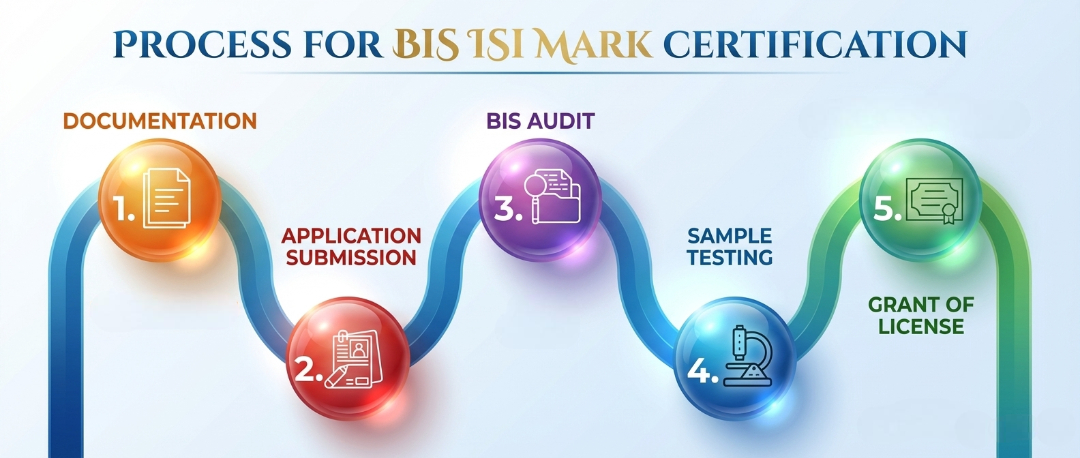
Step 1: Factory Infrastructure Assessment
Prerequisite Requirements:
• Adequate manufacturing space and layout
• Required machinery for pressing, welding, polishing
• In-house testing facilities for basic quality checks
• Calibrated pressure gauges and testing equipment
• Trained quality control personnel
Step 2: Documentation Preparation
Essential Documents Required:
• Company registration (GST, PAN, incorporation certificate)
• Factory license and layout plan
• Manufacturing process flowchart
• List of machinery with purchase details
• Quality control manual and test records
• Raw material supplier details with test certificates
• Technical specifications of pressure cooker models
Step 3: Application Submission to BIS
Submit Form V (for domestic manufacturers) along with complete documentation and prescribed fees to the relevant BIS branch office. Application must include details of all pressure cooker models to be manufactured.
Step 4: Sample Collection by BIS Officer
BIS inspection officer visits factory to collect random samples from regular production. Samples are sealed and sent to BIS-approved laboratory for testing as per IS 2346.
Step 5: Testing at BIS Approved Laboratory
Critical Testing Requirements:
• Testing must be done in BIS-recognized laboratory only
• Samples tested against all clauses of IS 2346
• Test report must be comprehensive with pass/fail status
• Failure in any test requires rectification and re-testing
Step 6: BIS Factory Audit & Inspection
BIS officials conduct thorough factory audit covering:
• Manufacturing process verification
• Quality control system assessment
• Raw material storage and testing
• Worker safety measures
• Calibration status of testing equipment
• Record maintenance systems
Step 7: Grant of BIS ISI Mark License
Upon satisfactory test reports and factory audit, BIS grants license number with specific conditions for marking. License is valid for one year initially, renewable annually.
Step 8: Marking & Surveillance Compliance
Manufacturers must emboss ISI Mark, license number, and standard number on every pressure cooker as per BIS guidelines. Regular surveillance inspections ensure ongoing compliance.
Timeline & Cost for BIS Pressure Cooker Certification
| Phase | Estimated Timeline | Key Activities |
|---|---|---|
| Documentation & Factory Setup | 2-4 Weeks | Document preparation, factory readiness assessment |
| Application Processing | 2-3 Weeks | BIS scrutiny, preliminary document verification |
| Sample Testing | 3-5 Weeks | Laboratory testing as per IS 2346 requirements |
| Factory Audit | 2-4 Weeks | Audit scheduling, inspection, compliance verification |
| License Grant | 1-2 Weeks | Final approval and license issuance |
| Total Estimated Duration | 10-18 Weeks | Complete certification process from start to license |
Cost Components for Certification:
• BIS application and processing fees :- (Approx. 1,00,000)
• Laboratory testing charges :- (15,000-25,000 per model)
• Factory audit expenses :- (10,000-20,000)
• Consultancy and documentation support
• Annual license renewal fees :- (Approx. 50,000)
• Marking and surveillance inspection charges
Penalties for Selling Non-BIS Certified Pressure Cookers
Manufacturing, importing, or selling pressure cookers without valid BIS ISI Mark certification carries severe legal consequences:
• Product Seizure: Confiscation of entire uncertified inventory
• Heavy Fines: Penalties up to 5 lakhs under BIS Act, 2016
• Manufacturing Ban: Complete prohibition on production
• Customs Detention: Import consignments held at Indian ports
• Criminal Prosecution: Imprisonment up to 1 year for serious violations
• Market Exclusion: Removal from retail stores and e-commerce platforms
• Brand Damage: Loss of consumer trust and market reputation
Critical Components Requiring Special Attention in Pressure Cooker Certification
| Component | IS 2346 Requirement | Common Compliance Issues |
|---|---|---|
| Safety Valve | Must open at 1.05-1.15 times working pressure | Inconsistent pressure release, sticking valves |
| Pressure Regulator | Maintains pressure within ±0.2 bar range | Pressure fluctuations, unstable regulation |
| Gasket/Rubber Ring | Food-grade material, specific dimensions | Poor quality material, incorrect sizing |
| Lid Locking Mechanism | Secure locking, cannot open under pressure | Weak locking, premature opening |
| Body Thickness | Minimum specified thickness based on material | Thinner material used to reduce cost |
Strategic Benefits of BIS Certification for Pressure Cooker Manufacturers
Beyond regulatory compliance, BIS ISI Mark certification offers significant market advantages:
• Consumer Trust & Safety: ISI Mark assures safety, reducing liability risks and building brand reputation
• Market Access: Essential for selling to government institutions, defense canteens, and PSUs
• Competitive Advantage: Differentiates certified products in crowded market segments
• Quality Improvement: Systematic manufacturing processes enhance product consistency
• E-commerce Readiness: Mandatory for listing on Amazon, Flipkart, and other online platforms
Why Choose Standphill India for Pressure Cooker BIS Certification?
Navigating the complex BIS certification process for pressure cookers requires specialized expertise in metallurgy, safety engineering, and regulatory compliance. Standphill India offers end-to-end certification support:
Expert Technical Guidance: Deep understanding of IS 2346 requirements and pressure vessel safety principles
Documentation Excellence: Precise preparation of technical documents, process manuals, and quality records
Laboratory Coordination: Established relationships with BIS-approved testing facilities for pressure equipment
Factory Readiness: Complete audit preparation including layout optimization and quality system setup
Timely Processing: Streamlined processes reduce certification timelines by 40-50%
Post-Certification Support: Assistance with marking guidelines, renewals, and surveillance audit compliance
Success Story: "A Gujarat-based pressure cooker manufacturer faced repeated BIS audit failures due to inconsistent safety valve performance. Standphill India's technical team identified material quality issues, implemented improved testing protocols, and secured BIS certification within 14 weeks, enabling 300% sales growth through organized retail channels."
Industry Statistics: Pressure Cooker Market & Compliance in India
| Market Parameter | Current Status | Growth Projection |
|---|---|---|
| Annual Market Size | 3,200 Crore | 5,500 Crore by 2027 |
| BIS Certified Manufacturers | 45+ Companies | 70+ by 2025 |
| Compliance Rate (Organized Sector) | 95% | 99% by 2024 |
| Unorganized Sector Penetration | 35% Non-compliant | Target: 10% by 2026 |
| Export Potential with BIS | 450 Crore annually | 1,200 Crore by 2028 |
Common Challenges in Pressure Cooker BIS Certification
Manufacturers often encounter specific challenges during the certification process:
1. Material Compliance Issues: Using substandard aluminum or stainless steel that fails chemical composition tests
2. Safety Valve Failure: Inconsistent pressure release due to poor design or manufacturing tolerances
3. Welding Quality Problems: Weak joints in handle attachments or lid components
4. Documentation Gaps: Incomplete quality records, calibration certificates, or raw material test reports
5. Factory Infrastructure: Inadequate testing facilities or uncalibrated pressure gauges
Conclusion: Ensuring Safety Through Compliance
BIS certification for domestic pressure cookers under IS 2346 is not merely a regulatory formality—it's a critical safety imperative that protects millions of Indian households. With stringent standards developed through decades of safety research, this certification ensures pressure cookers can withstand operational stresses while providing essential safety features.
As consumer awareness about product safety grows and regulatory enforcement intensifies, BIS certification has become non-negotiable for market survival. The organized pressure cooker market is projected to grow at 12% CAGR, with certified products capturing an increasing share as consumers prioritize safety over price.
Don't let certification complexities limit your market potential. Partner with Standphill India to navigate the BIS certification process for pressure cookers efficiently, ensuring compliance while building a trusted brand in India's safety-conscious market.
[ Start Your Pressure Cooker BIS Certification Today – Contact Standphill India ]
Need BIS Certification Support?
Our experts can help you with documentation, testing, application filing and complete BIS approval process.