Table of Contents
Portland Pozzolana Cement (PPC) – Calcined Clay Based is a blended cement designed to improve durability, workability, and long-term performance while reducing clinker consumption. In this variant, calcined clay acts as the pozzolanic material instead of fly ash, making it particularly relevant in regions where fly ash availability is limited.
Calcined clay based PPC supports sustainable construction by lowering carbon emissions and enhancing resistance to chemical attack. In India, this cement is regulated by the Bureau of Indian Standards (BIS) under IS 1489 (Part 2). As per the Cement (Quality Control) Order, 2003, BIS (ISI Mark) certification is mandatory for the manufacture, sale, and import of this cement.
At Standphill India, we provide expert guidance and end-to-end support for manufacturers navigating the BIS certification process for Portland Pozzolana Cement (Calcined Clay Based), ensuring compliance with IS 1489 (Part 2).
What is IS 1489 (Part 2)?
IS 1489 (Part 2) is the Indian Standard that specifies requirements for Portland Pozzolana Cement manufactured using calcined clay. The standard defines composition limits, physical and chemical properties, performance criteria, and test methods to ensure structural safety and durability.
The objective of IS 1489 (Part 2) is to standardize the use of calcined clay as a pozzolanic material while ensuring consistent cement quality.
Purpose of BIS Certification for Calcined Clay Based PPC
BIS certification under IS 1489 (Part 2) ensures that:
i. ) Calcined clay used meets prescribed quality requirements
ii. ) Cement complies with strength, setting, and durability parameters
iii. ) Manufacturing processes follow controlled quality systems
iv. ) PPC is suitable for structural and general construction use
BIS certification acts as a statutory quality assurance mechanism for the construction industry.
Regulatory Framework: Cement (Quality Control) Order, 2003
Portland Pozzolana Cement (Calcined Clay Based) is notified under the Cement (Quality Control) Order, 2003. According to this order:
i. ) BIS certification is compulsory
ii. ) Non-certified cement cannot be legally manufactured or sold in India
iii. ) Products must conform strictly to IS 1489 (Part 2)
Is BIS Certification Mandatory for IS 1489 (Part 2) Cement?
Yes. BIS certification with an ISI Mark is mandatory for Calcined Clay Based Portland Pozzolana Cement. Without certification, the product cannot be sold or distributed in the Indian market.
Key Technical Requirements of IS 1489 (Part 2)
Composition Requirements
IS 1489 (Part 2) specifies:
i. ) Use of calcined clay with adequate pozzolanic activity
ii. ) Controlled blending with Portland cement clinker
iii. ) Use of gypsum or approved additives for setting control
Physical Properties
The cement must meet requirements for:
i. ) Fineness
ii. ) Setting time
iii. ) Soundness
iv. ) Compressive strength at specified curing ages
Chemical Requirements
The standard prescribes limits for:
i. ) Loss on ignition
ii. ) Insoluble residue
iii. ) Sulphur trioxide (SO?)
iv. ) Magnesia (MgO)
Properties of Calcined Clay Based Portland Pozzolana Cement
As per IS 1489 (Part 2), this cement provides:
i. ) Improved durability and impermeability
ii. ) Lower heat of hydration than OPC
iii. ) Enhanced resistance to sulphates and chlorides
iv. ) Better long-term strength development
v. ) Improved workability
Typical Applications of IS 1489 (Part 2) Cement
Calcined Clay Based PPC is suitable for:
i. ) Residential and commercial buildings
ii. ) General structural concrete
iii. ) Mass concrete works
iv. ) Hydraulic and water-retaining structures
v. ) Masonry and plastering applications
vi. ) Infrastructure and road construction
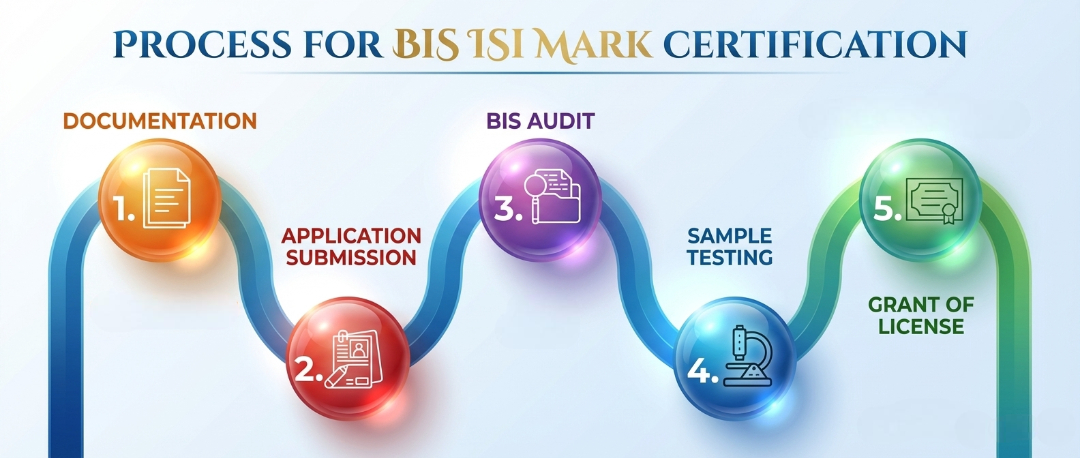
BIS Certification Process for IS 1489 (Part 2) Cement
The BIS certification process includes:
1. ) Identification of IS 1489 (Part 2) as applicable standard
2. ) Documentation preparation and verification
3. ) BIS application submission
4. ) Factory inspection by BIS officials
5. ) Sample collection and testing at BIS-recognized laboratories
6. ) Grant of BIS license with ISI Mark authorization
7. ) Periodic surveillance and renewal
Documentation Required for BIS Certification
Applicants must submit:
i. ) Factory incorporation and registration documents
ii. ) Manufacturing process flow chart
iii. ) Plant layout and machinery details
iv. ) In-house laboratory facilities list
v. ) Calcined clay source and quality test reports
vi. ) Quality control procedures
vii. ) Trademark and authorization documents
BIS Certification Fees and Cost
For Indian Manufacturers
| No. | Major Charges | Particulars | Amount | Remark |
|---|---|---|---|---|
| 1. | BIS Fee | Application Fees | INR 1000 | To be paid in BIS A/c directly. 20% rebate on Marking Fee for MSME units. |
| Audit Charges | INR 7000 | |||
| License Fee | INR 1000 | |||
| Marking Fee | INR 72,000 | |||
| 2. | Testing Charges | Sample Test Fee | As Applicable | To be paid into BIS approved Lab A/c |
| 3. | Standphill India Service Fee | Consultancy & others | As per actual | (Depending upon the product and the region of factory) |
For Foreign Manufacturers
| No. | Major Charges | Particulars | Amount | Remark |
|---|---|---|---|---|
| 1. | BIS Fee | Application Fees | USD 30 | To be paid into BIS A/c directly in USD (SWIFT). SAARC countries can pay in INR with GST@18% |
| Audit Charges (consolidated) | USD 3200 to USD 5900 | |||
| License Fee | USD 30 | |||
| Marking Fee | USD 1000 | |||
| 2. | Testing Charges | Sample Test Fee | As applicable | To be paid into BIS approved Lab A/c |
| 3. | Standphill India Service Fee | Consultancy & other charges | As per actual | (Depending upon the product and the location of mfg.) |
The exact cost depends on production capacity and compliance readiness.
Who Must Obtain BIS Certification for IS 1489 (Part 2) Cement?
BIS certification is required for:
i. ) Indian manufacturers of calcined clay based PPC
ii. ) Foreign manufacturers exporting to India
iii. ) Brand owners marketing PPC under their brand name
iv. ) Distributors must ensure only ISI-marked cement is sold.
Penalties for Non-Compliance
Manufacturing or selling non-certified PPC may result in:
i. ) Financial penalties
ii. ) Product seizure
iii. ) Suspension of manufacturing operations
iv. ) Legal proceedings under the BIS Act
Benefits of BIS Certification for Calcined Clay Based PPC
BIS certification offers:
i. ) Legal compliance with Indian regulations
ii. ) Eligibility for government and infrastructure projects
iii. ) Improved market acceptance and credibility
iv. ) Reduced regulatory and legal risks
v. ) Support for sustainable construction practices
Why Choose Standphill India for BIS Certification of IS 1489 (Part 2) Cement?
Standphill India provides comprehensive BIS certification consultancy services, including:
i. ) Technical guidance on IS 1489 (Part 2)
ii. ) Documentation and compliance audits
iii. ) Factory inspection preparation
iv. ) Testing coordination with approved laboratories
v. ) Post-certification surveillance and renewal assistance
Conclusion
Portland Pozzolana Cement (Calcined Clay Based) as per IS 1489 (Part 2) is an important blended cement supporting durability and sustainability in construction. As BIS certification is mandatory under Indian regulations, manufacturers must comply fully with IS 1489 (Part 2) requirements and obtain an ISI Mark license to ensure legal market access and long-term credibility.
Get in touch with Standphill India today and secure your BIS certification for Portland Pozzolana Cement (Calcined Clay Based) (IS 1489 Part 2) hassle-free!
Need BIS Certification Support?
Our experts can help you with documentation, testing, application filing and complete BIS approval process.