
Table of Contents
Masonry Cement is a specially formulated cement used primarily for brickwork, blockwork, plastering, and mortar applications. Unlike structural cement, masonry cement is designed to provide high workability, better water retention, smooth finish, and adequate bonding strength, making it ideal for non-structural masonry works.
In India, Masonry Cement is regulated by the Bureau of Indian Standards (BIS) under IS 3466. As per the Cement (Quality Control) Order, 2003, BIS certification with an ISI Mark is mandatory for the manufacture, sale, and import of Masonry Cement.
At Standphill India, we provide expert guidance and end-to-end support for manufacturers navigating the BIS certification process for Masonry Cement, ensuring compliance with IS 3466.
What is IS 3466?
IS 3466 is the Indian Standard that specifies the requirements for Masonry Cement. The standard defines the composition, physical properties, performance characteristics, and test methods to ensure consistent quality for masonry applications.
The objective of IS 3466 is to ensure that masonry cement provides adequate strength, superior workability, and durability for mortar and plastering works without being used for structural concrete.
Regulatory Status: Mandatory BIS Certification
Masonry Cement is notified under the Cement (Quality Control) Order, 2003. Accordingly:
1. ) BIS certification is compulsory
2. ) Cement must bear a valid ISI Mark
3. ) Manufacturing, selling, or importing non-certified masonry cement is prohibited
Purpose of BIS Certification for Masonry Cement
BIS certification under IS 3466 ensures that:
1. ) Cement meets minimum strength and performance requirements
2. ) Mortar prepared using masonry cement has proper bonding
3. ) Workability and water retention are maintained
4. ) Consumers and contractors receive consistent quality products
BIS certification protects both end users and the construction ecosystem from substandard materials.
Technical Scope of IS 3466
Composition Requirements
IS 3466 permits masonry cement to be manufactured using:
i. ) Portland cement clinker
ii. ) Mineral additives such as limestone or pozzolanic materials
iii. ) Performance-enhancing additives to improve workability and plasticity
iv. ) The formulation is controlled to ensure masonry-specific performance.
Key Properties of Masonry Cement
Masonry Cement as per IS 3466 offers:
i. ) Excellent workability
ii. ) High water retention capacity
iii. ) Smooth and uniform plaster finish
iv. ) Good bonding with bricks and blocks
v. ) Reduced cracking in plaster and mortar
Applications of IS 3466 Masonry Cement
Masonry Cement is used exclusively for:
i. ) Brick masonry
ii. ) Block masonry
iii. ) Plastering works
iv. ) Pointing and finishing works
v. ) Non-structural mortar applications
It must not be used for reinforced cement concrete or load-bearing structural elements.
BIS Certification Process for Masonry Cement
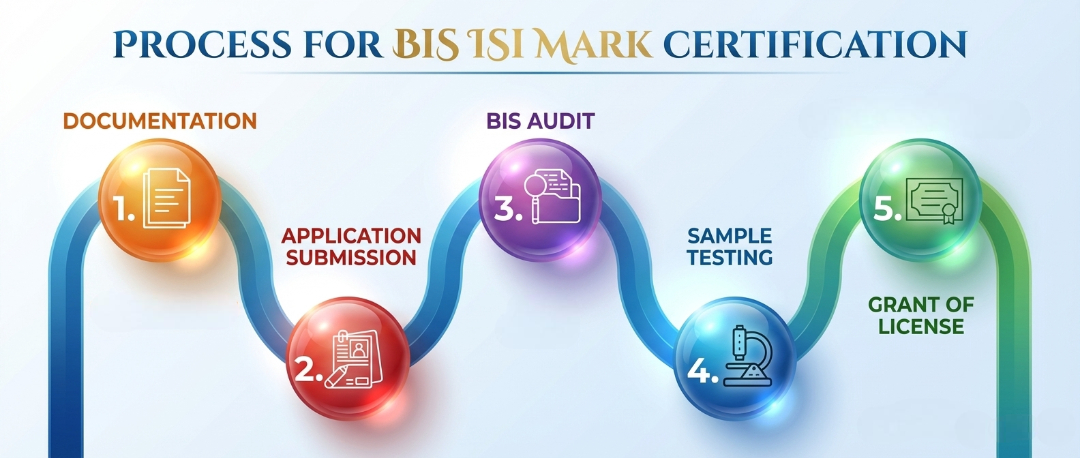
The BIS certification process under IS 3466 includes:
1. ) Identification of IS 3466 as applicable standard
2. ) Preparation of technical and quality documentation
3. ) Submission of BIS application
4. ) Factory inspection by BIS officials
5. ) Sampling of masonry cement
6. ) Testing at BIS-recognized laboratories
7. ) Grant of BIS license with ISI Mark
8. ) Periodic surveillance and compliance audits
Documentation Required for BIS Certification
Manufacturers must submit:
i. ) Company incorporation and factory registration documents
ii. ) Manufacturing process flow chart
iii. ) Plant layout and machinery details
iv. ) In-house quality control laboratory details
v. ) Raw material specifications and test reports
vi. ) Quality control and testing procedures
vii. ) Trademark and authorization documents
BIS Certification Fees and Cost for Masonry Cement
For Indian Manufacturers
| No. | Major Charges | Particulars | Amount | Remark |
|---|---|---|---|---|
| 1. | BIS Fee | Application Fees | INR 1000 | To be paid in BIS A/c directly. 20% rebate on Marking Fee for MSME units. |
| Audit Charges | INR 7000 | |||
| License Fee | INR 1000 | |||
| Marking Fee | INR 72,000 | |||
| 2. | Testing Charges | Sample Test Fee | As Applicable | To be paid into BIS approved Lab A/c |
| 3. | Standphill India Service Fee | Consultancy & others | As per actual | (Depending upon the product and the region of factory) |
For Foreign Manufacturers
| No. | Major Charges | Particulars | Amount | Remark |
|---|---|---|---|---|
| 1. | BIS Fee | Application Fees | USD 30 | To be paid into BIS A/c directly in USD (SWIFT). SAARC countries can pay in INR with GST@18% |
| Audit Charges (consolidated) | USD 3200 to USD 5900 | |||
| License Fee | USD 30 | |||
| Marking Fee | USD 1000 | |||
| 2. | Testing Charges | Sample Test Fee | As applicable | To be paid into BIS approved Lab A/c |
| 3. | Standphill India Service Fee | Consultancy & other charges | As per actual | (Depending upon the product and the location of mfg.) |
The exact cost depends on manufacturing capacity and compliance readiness.
Who Must Obtain BIS Certification for IS 3466 Cement?
BIS certification is mandatory for:
i. ) Indian manufacturers of masonry cement
ii. ) Foreign manufacturers exporting masonry cement to India
iii. ) Brand owners selling masonry cement under their trademark
iv. ) Dealers and distributors must ensure only ISI-marked masonry cement is sold.
Penalties for Non-Compliance
Non-compliance with IS 3466 may result in:
i. ) Monetary penalties
ii. ) Seizure of non-certified cement
iii. ) Suspension or cancellation of manufacturing operations
iv. ) Legal action under the BIS Act
Benefits of BIS Certification for Masonry Cement
BIS certification provides:
i. ) Legal authorization to sell masonry cement in India
ii. ) Improved acceptance among contractors and builders
iii. ) Consistent product performance
iv. ) Reduced regulatory and legal risk
v. ) Enhanced brand credibility
Is Hiring a BIS Consultant Mandatory?
Engaging a BIS consultant is not mandatory. However, due to technical documentation, inspection readiness, and compliance requirements, professional support helps manufacturers avoid delays and rejection.
Why Choose Standphill India for BIS Certification of Masonry Cement?
Standphill India offers specialized BIS certification consultancy for masonry cement, including:
i. ) Gap analysis against IS 3466 requirements
ii. ) Documentation preparation and compliance review
iii. ) Factory inspection preparation and assistance
iv. ) Coordination with BIS-recognized laboratories
v. ) Post-certification surveillance and renewal support
Conclusion
Masonry Cement governed by IS 3466 plays a critical role in brickwork and plastering applications across India. Given its regulatory importance, BIS (ISI Mark) certification is mandatory. Manufacturers seeking long-term compliance, market access, and credibility must strictly adhere to IS 3466 requirements and obtain a valid BIS license.
Get in touch with Standphill India today and secure your BIS certification for Masonry Cement (IS 3466) hassle-free!
Need BIS Certification Support?
Our experts can help you with documentation, testing, application filing and complete BIS approval process.