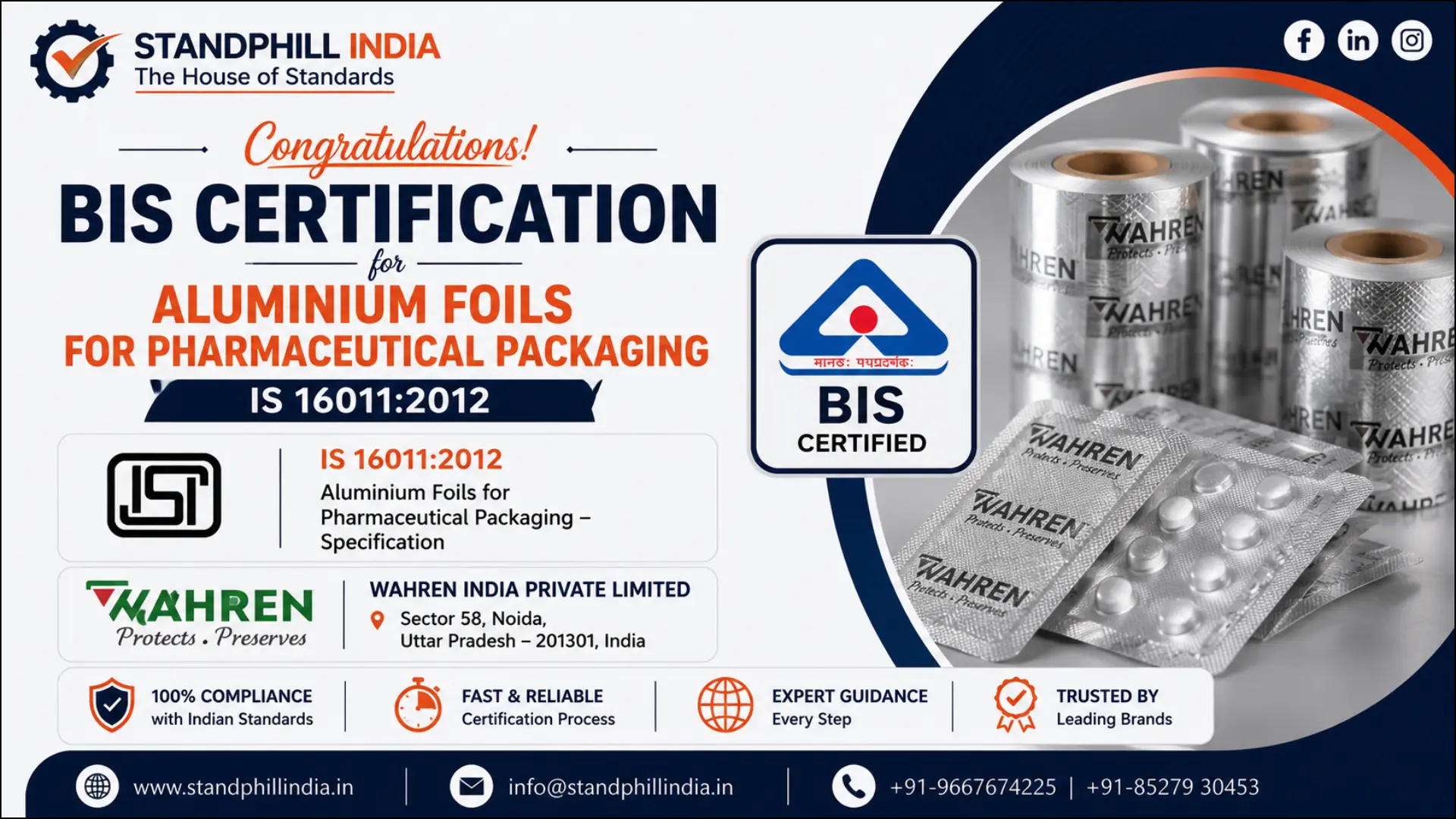
IS 16011:2012 is the Bureau of Indian Standards specification for aluminium and aluminium alloy foils used specifically in pharmaceutical packaging applications — including blister packs for tablets and capsules, strip packaging, and sachet-type drug packaging where aluminium foil serves as the primary barrier material.
This is a technically demanding standard because the foil is in direct or indirect contact with medicines — meaning material purity, surface cleanliness, barrier performance, and pinhole-free integrity are not just quality parameters but patient safety requirements.
Key requirements under IS 16011:2012 include:
Aluminium alloy composition — the alloy grade and composition must meet defined purity and compatibility specifications for pharmaceutical contact
Thickness and thickness tolerance — precise foil thickness is critical for consistent blister forming and sealing performance
Tensile strength and elongation — mechanical properties ensuring the foil performs correctly in high-speed pharmaceutical packaging machinery
Pinhole count limits — strict limits on the number of pinholes per unit area since pinholes compromise the barrier and allow moisture and oxygen ingress
Surface quality — freedom from wrinkles, scratches, stains, oil residues, and other surface defects that could contaminate pharmaceutical products
Lacquer and heat-seal coating specifications — requirements for the lacquer and heat-seal layers applied to the foil for blister and strip pack bonding
Migration safety — ensuring no harmful substances migrate from the foil into the pharmaceutical product
Marking and labelling requirements for certified pharmaceutical foil batches
BIS certification under IS 16011:2012 is mandatory for aluminium foil manufacturers supplying the pharmaceutical packaging sector in India. Pharmaceutical companies — both Indian and multinational — require BIS-certified foil from their packaging material suppliers as part of their own Good Manufacturing Practice compliance and drug regulatory requirements.