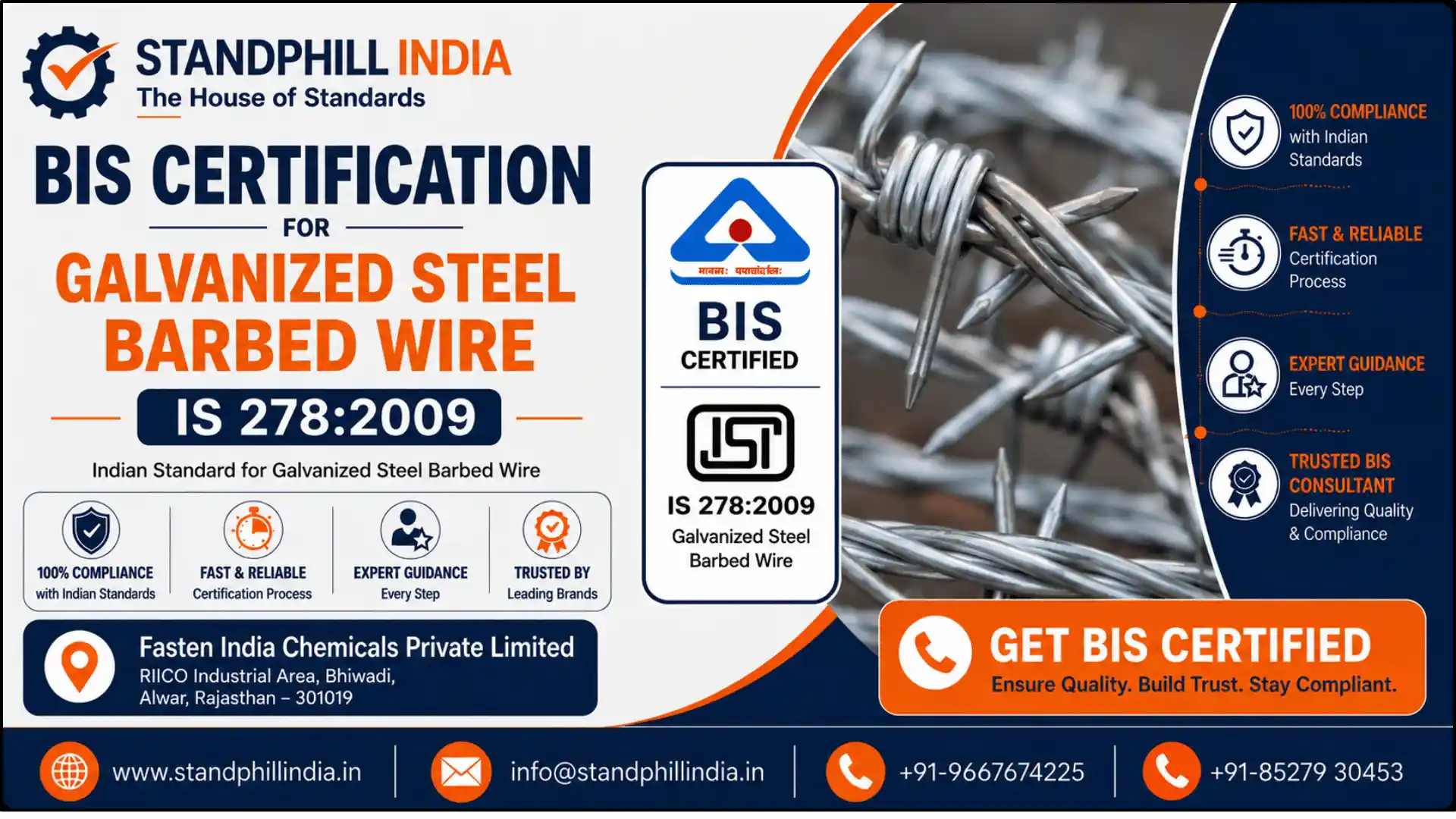
IS 278:2009 is the Bureau of Indian Standards specification for galvanized steel barbed wire used in fencing applications. The standard defines the wire construction, dimensional accuracy, galvanization quality, and mechanical performance requirements that barbed wire manufacturers must meet before their products can carry the BIS ISI Mark.
Key requirements under IS 278:2009 include:
1. Line wire diameter - the main carrying wire must conform to specified diameter and tolerance requirements
2. Barb wire diameter - the wire used to form the barbs must meet defined diameter specifications
3. Barb length and spacing - barbs must be within defined length ranges and spaced at specified intervals along the line wire
4. Barb twist - the number of turns wrapping the barb around the line wire must meet specified requirements
5. Tensile strength - the wire must meet minimum tensile strength values to ensure it holds up under field installation tension and load
6. Elongation - minimum elongation requirements ensuring the wire is not brittle and can withstand handling and installation
7. Zinc coating weight (galvanization) - the zinc coating must meet minimum weight per unit area requirements - this is critical for corrosion resistance and the long-term performance of the fencing
8. Wrapping test - the wire must be capable of being wrapped without fracture under specified test conditions
9. Marking requirements - ISI Mark and required identification must be correctly applied to certified barbed wire products
BIS certification under IS 278:2009 is mandatory for galvanized steel barbed wire manufacturers under the BIS Act, 2016. Government supply tenders for agricultural, defence, railway, and infrastructure fencing all specify BIS ISI Mark certified barbed wire as a procurement requirement - making certification a direct commercial necessity for barbed wire manufacturers in India.