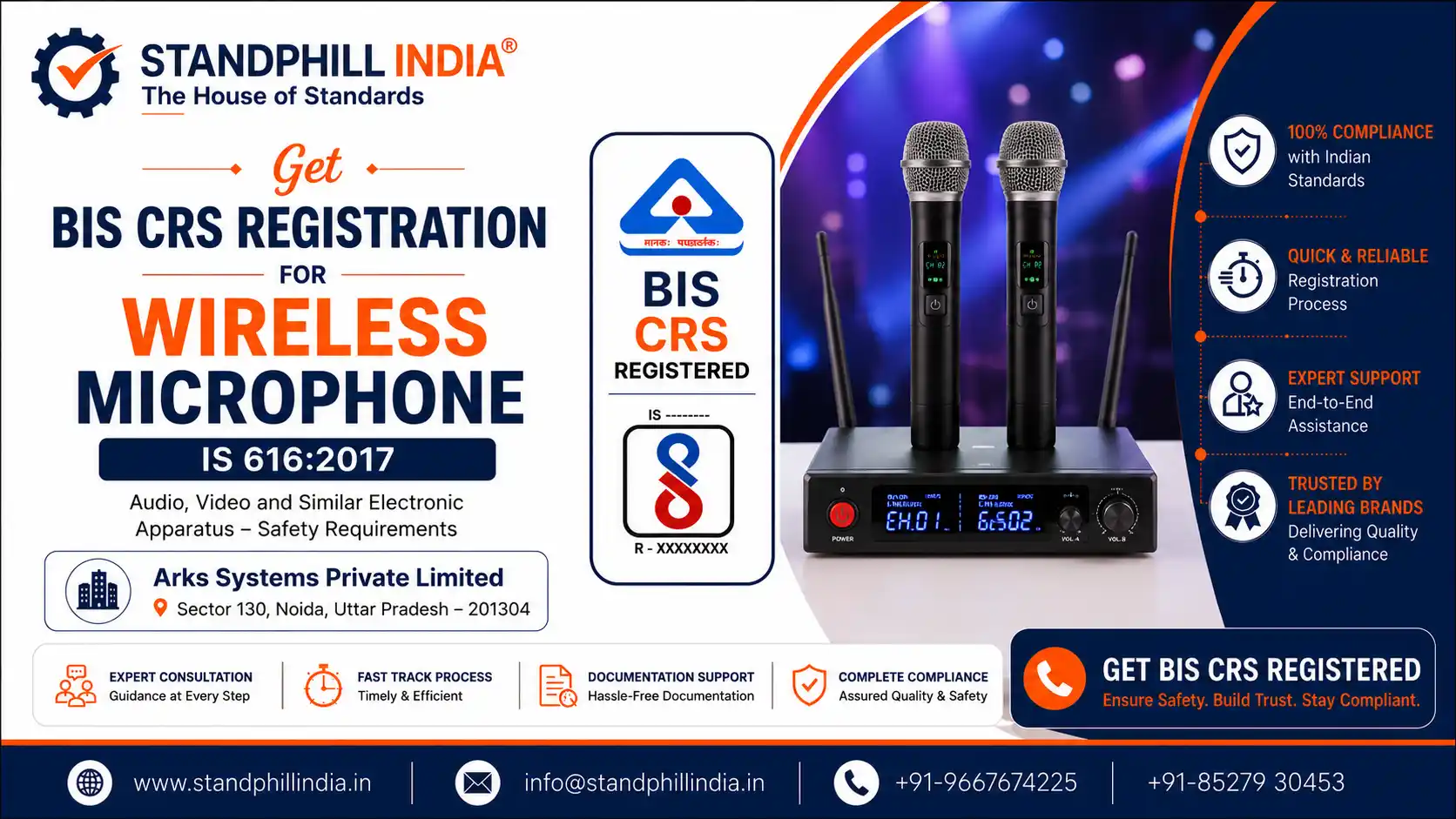
IS 616:2017 is the Bureau of Indian Standards specification for audio, video, and similar electronic apparatus - aligned with IEC 60065:2014, the international safety standard for this product category. Wireless microphones fall within the scope of IS 616:2017 as audio electronic apparatus that incorporate radio frequency transmission systems, rechargeable or replaceable battery power, and in some configurations mains-powered receiver units.
IS 616:2017 covers the complete safety requirements that audio electronic products must satisfy to protect users from electrical, thermal, mechanical, and radiation hazards. For wireless microphones specifically - which are handled by performers, presenters, and speakers in close physical proximity, often in high-humidity environments and under physically demanding use conditions - the safety requirements take on particular relevance.
Key safety requirements under IS 616:2017 / IEC 60065:2014 for wireless microphones include:
Electrical Safety - Receiver Unit
For mains-powered receiver and base station units — insulation resistance, creepage and clearance distances, dielectric strength, and touch current limits protecting users and equipment operators from electric shock through the receiver chassis, antenna connections, and audio output ports.
Battery Safety - Transmitter Unit
For handheld, headset, and lavalier transmitter units powered by rechargeable or replaceable batteries — protection against overcharge, over-discharge, short circuit, and reverse polarity conditions. Lithium battery transmitters require robust protection circuitry to prevent thermal runaway, venting, and fire hazards in products that are held in the hand and worn on the body during use.
Thermal Requirements
Surface temperature limits for accessible parts of both transmitter and receiver units - preventing burns from extended contact during performance and presentation use where the transmitter is held continuously or worn close to the skin.
Mechanical Strength and Durability
Structural integrity of the microphone capsule housing, transmitter body, antenna, belt clip, and connection interfaces - ensuring the product withstands the physical stresses of regular handling, dropping, and stage use without failing in ways that create hazard or expose internal live components.
RF Transmission Safety
Compliance with applicable limits on radio frequency power output - ensuring the wireless transmitter operates within safe and legally permitted RF emission limits for handheld and body-worn devices in close proximity to users.
Fire Enclosure
Flammability requirements for enclosure materials of both transmitter and receiver units - ensuring the product does not propagate fire if an internal fault occurs, particularly relevant for receiver units that may operate unattended for extended periods.
Acoustic Output Safety
Sound pressure level limits applicable to any earpiece or in-ear monitoring outputs associated with the wireless microphone system - protecting users from hearing damage from unexpectedly high audio output levels.
Marking Requirements
Rated voltage or battery specification for the receiver unit, RF operating frequency band, manufacturer identification, model designation, country of origin, and CRS R-Number must be clearly and permanently marked on the product and its packaging.
Full details on IS 616:2017 CRS registration requirements and the process are available on our dedicated service page.
ALSO READ: CRS Registration for Audio and Video Electronic Products - IS 616:2017